L1: Introduction
Definitions
Cloud Computing is a model for enabling ubiquitous, convenient, on-demand network access to a shared pool of configurable computing resources (e.g. network, servers, storage, applications and services) that can be rapidly provisioned and released with minimal management effort or service provider interaction.
Why cloud computing?
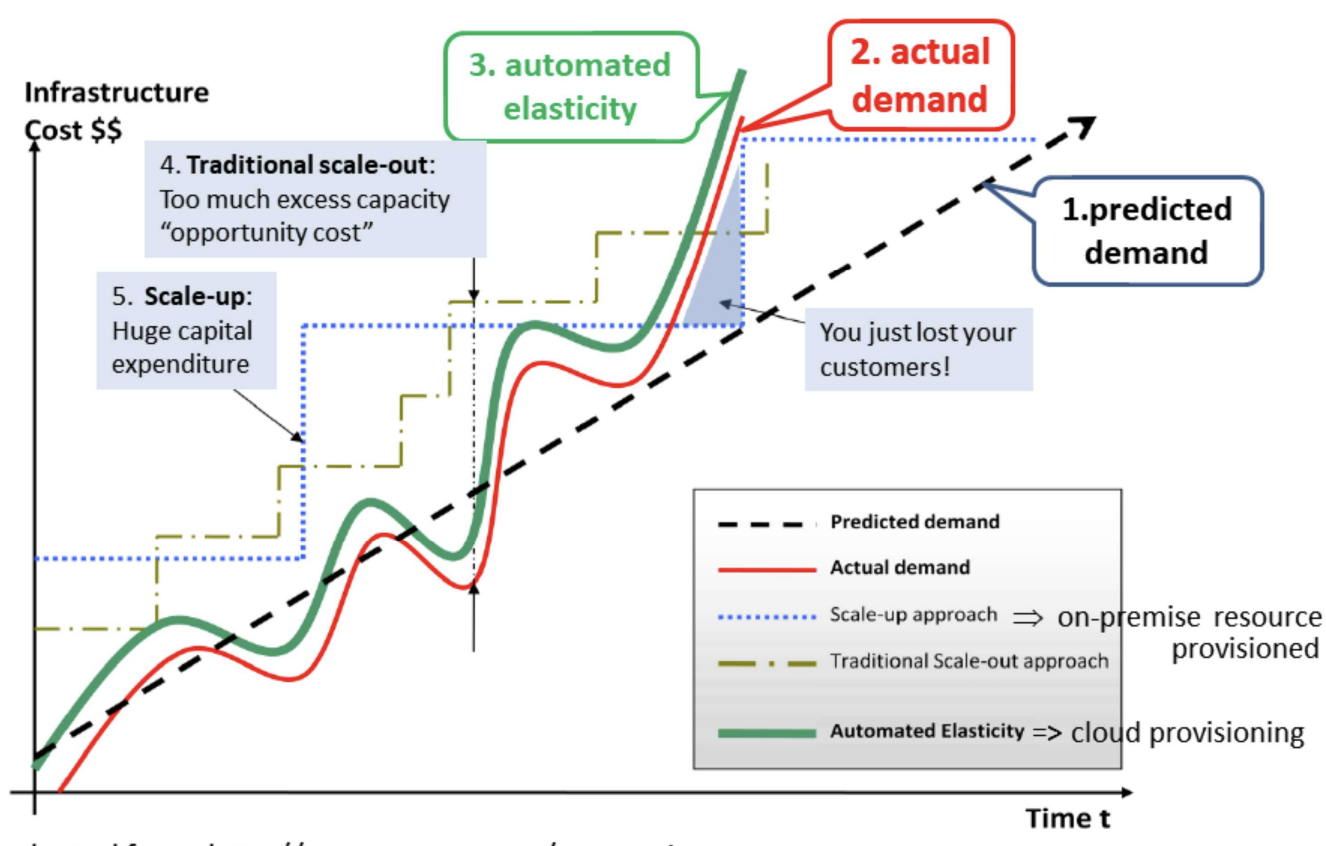
- Technology (cloud-enabled platforms and services) for current/future innovations and disruptions
- Reduces business cost:
- Improve match between elastic resource demand and elastic computing resource
- Resource demand:
- Elastic user demand: peak/trough, business cycles
- Mismatch between elastic resource demand and fixed (in-house) resource capability
- Loss in business opportunity and higher business cost
- Computing resource:
- Commoditized and shared (economy at scale)
- Internet (latency and bandwidth)
- Next wave of cloud disruption elivers advance capability around AI, blockchain, IoT, etc
Key business driver
Capacity planning
- Process of determining and fulfilling future demand of an organization’s IT resources, products and services
- Challenges: usage/demand fluctuations, peak usage, cost of resource provisioning
- Strategies:
- Lead strategy: add capacity in anticipation of demand
- Lag strategy: add capacity when resources reach its full capacity
- Match strategy: add capacity in small increments as demand increases
- Cloud: on-demand self-service, rapid elasticity, measured service
Resource provisioning
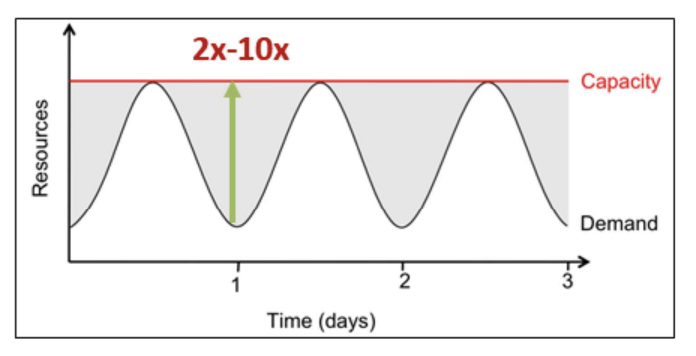
Provisioning for peak load
Provisioning for peak load:
- Peak workload can be 2x-10x average
- Even if peak load can be correctly anticipated, resources are wasted (shaded area) during non-peak time
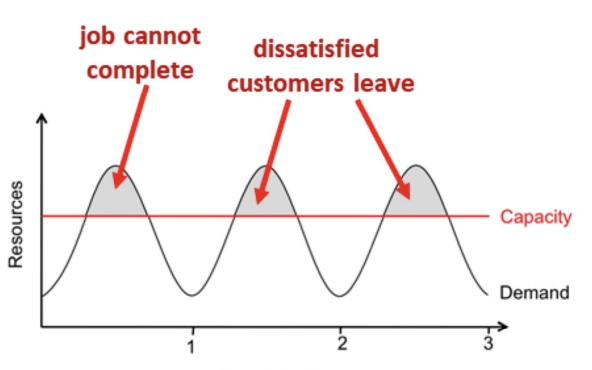
Under-provisioning: loss of potential revenue from users not served (shaded area)
Cost reduction
- Difficult to align IT costs and business performance
- On-prem system:
- IT department is a cost center in an enterprise
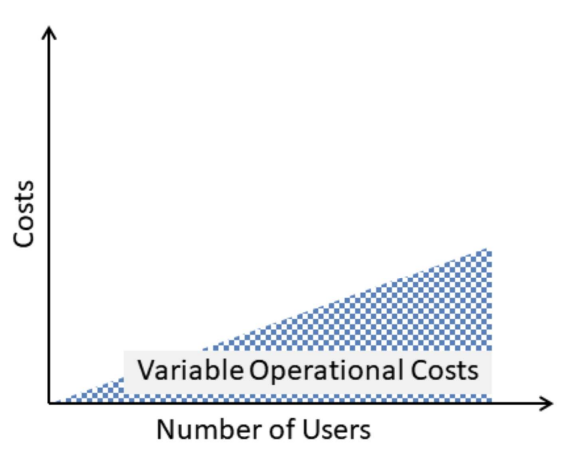
- Costs: upfront investment (ownership) costs (capital expenditure) + operational costs
- Operational costs: technical staff (manpower), utility bills (power and cooling), security and access control to protect infrastructure, administration/account staff (software licenses, etc)
- Cloud computing offers cost efficiency at scale
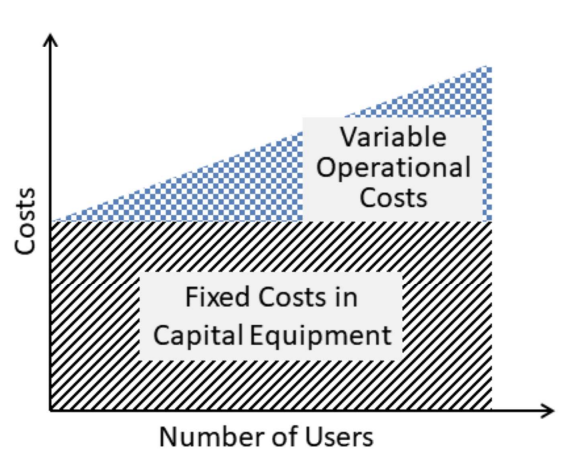
Traditional IT (on-prem)
Organizational agility
- A measure of an org’s responsiveness to change
- On-prem: Upfront investments and infra ownership costs may be prohibitive
- Cloud:
- Elastic IT resources to respond to business cycles beyond what was previously predicted or planned
- Software fixes/updates: update data centers vs millions of clients
- Data center allows faster introduction of new hardware innovations
Key terms
-
Elastic resource
-
Availability
-
Capacity planning (resource provisioning)
-
Scaling (horizontal, vertical)
-
Clousd-based IT resources
-
Cloud service
-
Trust boundary
Scaling
- Ability of IT resources to handle increased or decreased usage (business) demand
- Horizontal scaling (out or in): add same resource type
- Vertical scaling (up or down): replace resource with higheer or lower capacity or add resources to a single node
| Horizontal | Vertical | |
|---|---|---|
| Cost | Less expensive using commodity hardware | More expensive using specialized hardware |
| Availability | Resources instantly available | Resources normally instantly available |
| Ease of setup | Resource replication and automated scaling | May need additional setup |
| Additional IT resources | Needed | Not needed |
| Hardware capacity | Not limited by hardware capacity | Limited by hardware capacity |
Cloud service
- Any IT resource made remotely accessible via a cloud
- A multitude of service usage models: IaaS, PaaS, SaaS
Cloud service consumer
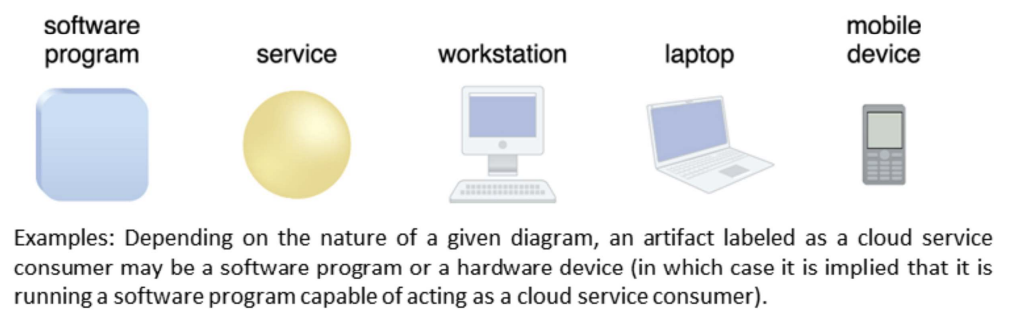
- A runtime role assumed by a software program to access a cloud service
Technical challenges
- Software development: different cloud platforms and services accross cloud providers
- Tools are continuously evolving
- Moving large data is still expensive
- Security
- Internet dependence
- Quality of Service
- Energy used
- …
Non-technical challenges
- Increased security vulnerabilities
- Reduced operational governance control
- Privacy/Legal issues: data localization, multi-regional compliances
- Vendor lock-in
- Non-standard
- Sevice level aggrement
- …
Increased security vulnerabilities
- Responsibility over data security becomes shared with cloud providers
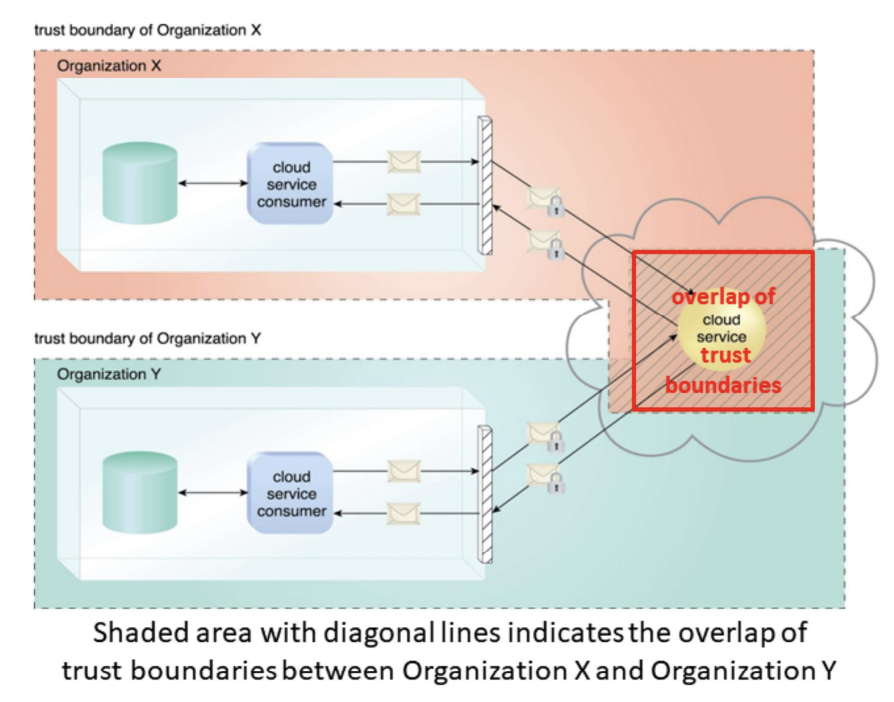
- Expansion of trust boundary introduces new vulnerabilities
- Shared IT resources accross different cloud consumers introduces overlapping trust boundary
- Overlapping trust boundaries introduce opportunities for malicious cloud consumers to steal or damage business data
Expanded trust boundaries
Reduce Operational Governance Control
- Cloud consumers: different levels of IT resource governance between on-prem and cloud
- Unreliable cloud provider may not maintain/meet SLA guarantees
- Longer distance between cloud consumer and provider introduces additional fluctuating latency and bandwidth constraints
- Mitigate by legal contracts combined with SLAs, technology inspections and monitoring
Privacy and Legal Issues
- Data centers are set up in affordable or convenient geographical locations
- Data localization/residency: Industry ir government regulations on data privacy or storage policies, e.g. personal data belonging to UK citizens be kept within UK
- Legal issues on accessibility and disclosure of data, e.g., laws require data to be disclosed to government agency
- Tension between personal rights (privacy) and society, e.g. Tracetogether (location, proximity data)